Annual Session 2026 Speaker:
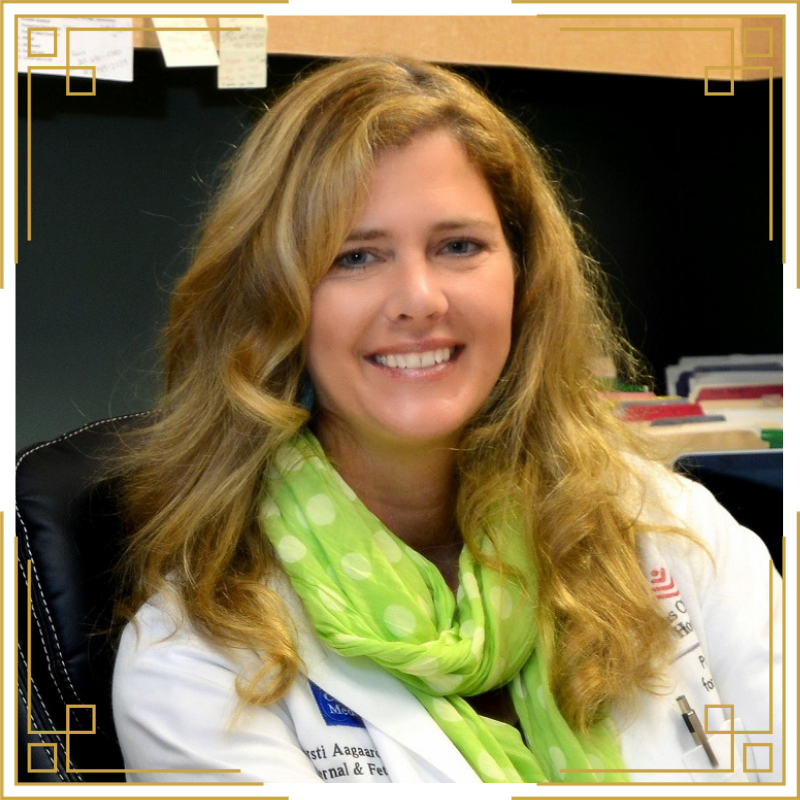
Kjersti Aagaard,
MD, PHD, MSCI

About the speaker:
Dr. Kjersti Aagaard, M.D. Ph.D. MSCI is honored and thrilled to serve as the Medical Director of HCA Gulf Coast Division and Texas Maternal Fetal Medicine. She also serves HCA nationally as their National Medical Director and Physician Advisor for Women’s Research and is the Chair of the HCA Women’s Research Advisory Board. She holds research scientist appointments with Boston Children's Hospital, Harvard Medical School, and the Oregon National Primate Research Center.
Prior to joining HCA, Dr. Aagaard served as the Henry & Emma Meyer Endowered Chair and Professor in Obstetrics & Gynecology and Vice Chair of Research at Baylor College of Medicine and Texas Children’s Hospital, where she practiced Maternal Fetal Medicine and was a valued physician, scientist, educator, and leader for two decades. Dr. Aagaard earned her Bachelor of Science degree from Mills College, her Ph.D. in Immunology from Mayo Graduate School of Medicine, and her M.D. from the University of Minnesota, where she also completed her residency in Obstetrics & Gynecology.
Dr. Aagaard’s fellowship in maternal-fetal medicine was at the University of Utah, where she concomitantly earned a Master's in Clinical Investigation. Dr. Aagaard is a renowned clinician, specializing in the interactions between genetics and environmental exposures and the clinical manifestations resulting in preterm birth and congenital anomalies, and pregnancies complicated by diabetes, hypertension, and infectious diseases. Dr. Aagaard’s impact has been nationally recognized with receipt of numerous awards over the years, including the Michael E. Debakey Excellence in Research Award (2015), the Nature Award for Outstanding Scientific Mentorship (2019), election to the American Society of Clinical Investigators (2019) the SRI President’s Achievement Award (2020), and the Society of Toxicology Translational Research Impact Award (2023). Dr. Aagaard is a frequent visiting professor and keynote speaker at many institutions and national and international meetings, and in 2017, she gave an invited presentation for the Nobel Symposium on ‘Unexpected Beginnings in the Development of Our Microbiome’ at the Karolinska Institute in Stockholm. In addition, Dr. Aagaard is a dedicated and award-winning educator, teaching continuously since 2007 in the schools of medicine and biomedical graduate sciences, and served as the co-Director of the Baylor College of Medicine MSTP MD/PhD program for 13 years. Dr. Aagaard has always remained dedicated to serving pregnant patients as their physician, and she has been elected to Texas SuperDoctors every year for over a decade.
In addition to her role as a direct patient care maternal-fetal medicine physician, Dr. Aagaard has been dedicated to discovering the molecular underpinnings of pregnancy and early infancy disorders and finding cures through research. With continuous NIH funding since 2005, she and her team members have shared their landmark discoveries and developed technologies that have enriched translational and discovery science, particularly within perinatal and pregnancy-related research. Dr. Aagaard has been supported in this work by funding from the March of Dimes, the Burroughs Wellcome Fund, USAID, the Gates Foundation, the Thrasher Foundation, and the National Science Foundation. Nationally, she has served on multiple NIH and National Academy of Sciences Committees and Advisory panels, multiple society leadership roles, and was a permanent member of the NICHD Pregnancy & Neonatology study section through 2017. Dr. Aagaard’s sentinel set of scientific contributions has centered around (1) characterizing the impact of environmental health exposures (including microplastics) on pregnancy and childhood health, (2) developing novel and relevant primate models for translational research, (3) conducting high impact discovery science with a wide set of 'omics technologies, and (4) executing high impact, high rigor clinical trials research. She and her team have published over 350 original manuscripts.
When not caring for patients or engaging in research, you can find her with her family (including her fur babies) running or riding the trails around their home in Tomball, Texas.
Conflict of Interest: N/A
About the Lecture:
Title: "Unexpected Beginnings: The Value of Pregnancy Microbiome Care & Oral Health."
Saturday, September 12, at 1:00 PM on the Main Stage
In this keynote address, we will review the incredibly diverse world of microbiome science through the lens of pregnancy. By initially providing an overview of the unique characteristics of the microbiome during pregnancy and the postpartum period, we will set the stage for appreciating how interventions aimed at microbial health during pregnancy are of potential lifelong benefit.
Of interest to the AAOSH audience, during pregnancy, periodontal disease is associated with a 2- to 3-fold increased risk for a preterm birth (PTB) or low birthweight (LBW) delivery. This relationship may be explained by the inflammatory response associated with periodontal disease, or through hematogenous spread of oral commensal or dysbiotic microbiota. In humans, 1 mm3 of dental plaque contains approximately 100 million aerobic and anaerobic bacteria, including opportunistic pathogens (pathobionts) implicated in periodontal disease, transient bacteremia, and intra-amniotic inflammation leading to PTB or fetal growth restriction. Animal studies have demonstrated that inoculation of oral pathobionts results in transplacental transmission and inflammatory PTB.
Aligning with these studies and other clinical trials, we recently demonstrated in a large cluster randomized trial that xylitol chewing gum was effective at preventing preterm and low birthweight deliveries in Malawi. In this open-label, multicenter, matched-pair cluster-randomized, controlled trial, pre-pregnant and early pregnant participants who received tailored antenatal health messages and xylitol-containing chewing gum had a significant reduction in the co-primary study outcomes of preterm and low birthweight deliveries. Specifically, we observed a 24% reduction in the incidence of <37 week preterm delivery and a 30% reduction in very low birthweight neonates compared to participants at active control sites with the same antenatal health messages. After rigorously controlling for potential bias given the number of clusters, the significance in the measures of association between xylitol initiation and reduction of preterm births at 34 to 36 6/7 weeks withstood correction with a RR of 0.73 (95% CI 0.53-0.99; p=0.048), and all point estimates for both our primary outcomes remained consistent, albeit with limitations in confidence. Importantly, this risk reduction resulted in significantly fewer neonatal demises (0.2% [8/4305] vs. 0.4% [22/5260]; RR 0.41, 95%CI 0.19-0.89) and composite of non-live birth or neonatal demise (paired RR 0.56 95% CI 0.33-0.95, p=0.032). Among the approximate 10% of study participants compliant with two dental visits 10 weeks apart, only the xylitol group demonstrated a significant improvement in clinical metrics of gingival inflammation (bleeding on probing). These results add to the existing literature demonstrating that non-surgical periodontal therapies (e.g., dental scaling and root planing) may improve perinatal and obstetric outcomes.
- To describe the importance of the microbiome across the lifespan
- To identify how the microbiome, including the oral microbiome, is wonderfully unique and adaptive during pregnancy and postpartum
- To present focused data and a concise history of the importance of oral health in pregnancy and preterm birth
- To analyze the outcomes of the PPaX trial, demonstrating the benefits of oral xylitol in chewing gum on the prevention of preterm birth
- To share future opportunities for research and advancement in oral health and pregnancy outcomes
- Focus on enabling and advancing oral health in pregnancy and postnatal care
- Consider how you can optimize oral health in pregnancy
- Consider prebiotic approaches to optimizing oral health in pregnancy and postnatal care
